
What is a DXA scan and do I need one?
My doctor recently suggested I get a DXA scan. I had heard of DXA before, but knew nothing of the process or how the results are measured. That made me think there may be others out there in a similar situation. So now that I’ve had my scan and seen the results, I thought I’d share that information with you.
But first, I need to remind you that while I am a health and wellness coach, I am not a healthcare professional. If you need medical advice, please contact your healthcare provider.
What is a DXA scan and how does it work?
DXA (also sometimes called DEXA) stands for dual-energy X-ray absorptiometry, or in layperson’s terms, a bone density test. According to the Cleveland Clinic, “It’s similar to a regular X-ray, but measures the strength and mineral content of your bones instead of just taking pictures of them.”
The process itself is quick and painless. When I went in for my scan, I completed a quick medical history asking about age at menopause, if I’d ever had a hysterectomy, any broken bones, and whether I had shrunk in height, among other things. Then I was weighed and had my height measured. I haven’t been measured in years, and was surprised to learn that indeed I have shrunk about three-quarters of an inch from my tallest height.
Next was the scan itself. There were no needles or injections involved, and I did not even have to undress. However, because I was wearing shorts with a metal zipper, I did need to unzip my shorts and open them enough so the zipper was not over my spine.
I laid face-up on an x-ray table, and the technician passed a scanning arm over my spine. Then she had me zip up my shorts (so the metal zipper would not be over my hip bones), and she positioned my legs slightly apart with the toes tipped in. She then passed the scanning arm over my hips. And that was it. I was there for a total of 15-20 minutes.
How do I prepare for a DXA scan?
For me, there was very little preparation required for a DXA scan. I was able to eat and drink as normal right up until the exam. I also took my regular medications and supplements, with the exception of calcium. I was told that calcium can leave black spots on the scan so not to take any calcium supplement, including TUMS or Rolaids, within 24 hours of the scan. Of course, you will want to follow any specific directions given by your healthcare provider.
As far as clothing, I suggest you wear comfortable clothing without metal zippers or buttons and leave your metal jewelry at home.
When do I need a DXA scan?
Your doctor will order a DXA scan when they believe it is necessary to determine your risk of fracture. Most healthy women routinely get their first DXA scan at age 65; for men, it’s age 70. According to the Cleveland Clinic, doctors may suggest the following people get a DXA scan at a younger age:
- People older than 50 who’ve broken a bone in the past
- People whose biological parents or grandparents have osteoporosis
- People who’ve lost an inch and a half or more from their tallest height
- People who smoke or have alcohol abuse disorder
- People with some autoimmune disorders
- People with Vitamin D deficiency
- People on certain medications
In my case, my doctor requested the DXA a couple of years earlier than standard (at age 63), because my mother had osteoporosis and I have a history of low Vitamin D and thyroid disease.
What type of results will you get from a DXA scan?
Of course, your ordering physician will go over the results with you, but in general, here’s how the Cleveland Clinic describes the results:
“Healthcare providers use a system called a ‘T score’ to measure your bone density. Your T score compares your bone density to a healthy, average person in their 20s or 30s. The results are measured as a negative number. The closer to zero your T score is (including being a positive number), the stronger your bones are:
- Between 0 and -1 is a healthy bone density.
- A score between -1 and -2.5 means you have osteopenia, which can increase your osteoporosis risk.
- -2.5 or lower means you have osteoporosis or weakened bones. It also means you have an increased risk of breaking a bone.”
The facility I went to also gave me a “Z score,” which is a comparison to the average healthy person of the same age, sex, and ethnicity. A Z score of more than -2 is generally considered within the normal range.
In case you are curious, my results fell within the normal range. Yay! All that healthy living might be paying off.
What can you do to strengthen your bones or slow bone loss?
There are three primary actions your doctor may suggest if you have low bone density. Items 1 and 2 are also great preventive measures for all of us.
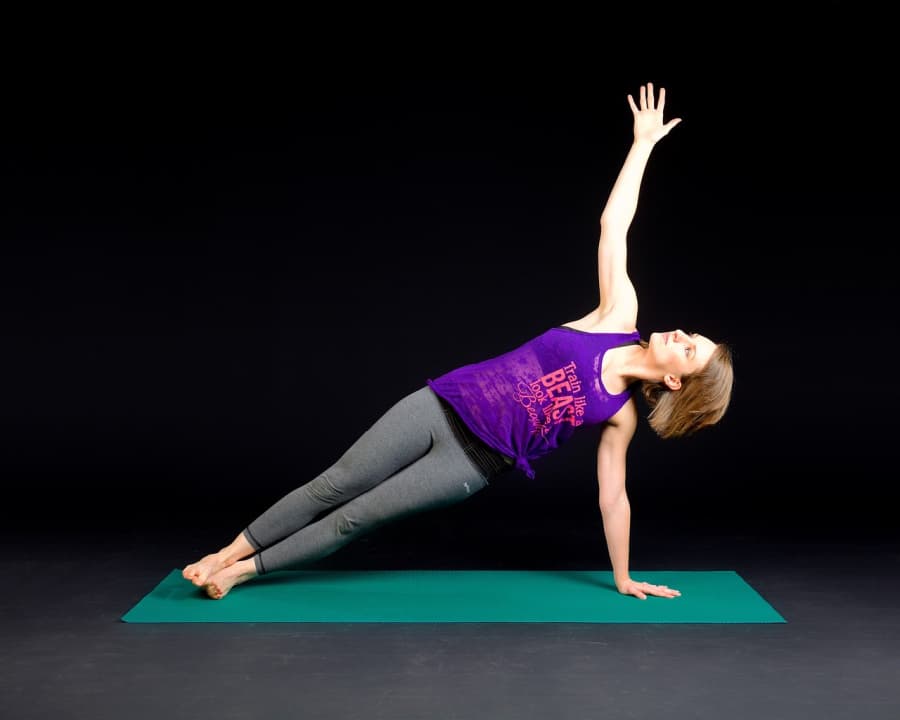
- Exercise more, particularly weight-bearing exercises such as walking, yoga, and strength training.
- Eat more foods high in Vitamin D and calcium or take a supplement.
- Take prescribed medication to slow bone loss.
Your turn
- If you have additional questions about my experience with the DXA scan, please feel free to ask. I’m happy to share all that I can.
- Have you had a DXA? Was your experience similar to mine?
- What else is on your mind? Anything at all; I just love to hear from you.
Image by Hannah Wells from Pixabay





Knowing osteoporosis is pretty rampant in the women in my family I’ve been trying to keep up a good exercise/training program because I don’t do that well with eating lots of calcium/ vitamin-D.
As I understand it, Joanne, weight-bearing exercise is an important part of building strong bones, so good for you in that category. I typically steer away from supplements, as I’m not convinced they are effective, but as my readings were low on calcium and Vitamin D over several tests, my doctor recommended I start taking that supplement, and it appears to have helped.
Very interesting to me, as I think I’ve shrunk 2 inches. I’ve had back surgery and wonder if that contributed to my shrinking. My doctor has not mentioned this test, but I may ask her about it at my next physical. Did your insurance pay for the test? Thanks Christie!
It wouldn’t hurt to ask your doctor, Cindy. You are a little young yet, but with our family history and your surgery, it might warrant an early DXA. My insurance will cover it. I’m not sure yet if it will be preventive (covered 100%) or diagnostic (applied to my deductible), so that will be interesting to see.
Oooh, yes. I probably should do this. Mine is probably not so good #WWWhimsy
It would be good to know for better or for worse, Lydia. Good luck!
Hi Christie, I’m so pleased you had your scan. I had one last year and recently started working again with my physio for strength training. I am deadlifting and squatting 30kg, which is much heavier than I’ve been doing. Lat pull downs 21kg and shoulder press 18kg. We are stronger than we think but for me it is about keeping my bones strong and my muscle mass increased to avoid moving from osteopenia to Osteoporosis. #WWWhimsy x
Excellent, Sue. It feels good to see our strength increase, doesn’t it? And then to know it helps our bones as well is great. Enjoy your travels!
Hi Christie – I had a bone scan when my parathyroid gland was causing issues – the parathyroid and Vit D play big roles in regulating calcium uptake and bone density. Fortunately mine was all good (even without all the weight bearing exercise I should be doing and don’t get around to!) Glad you shared such interesting info about it – and that it’s not an “old lady’s” test.
Yes, Leanne, my thyroid and Vitamin D combined were what led my doctor to request the scan as well. I’m glad your results were good. It’s funny what we consider to be “old lady” stuff isn’t it? I’d rather have an old lady test than an old lady hip break though!
That’s great that you had your scan Christie. I spread the word whenever I get the chance. I’ve had 3 dexa scans. The first was a bit over two years ago, and I had a dreadful but expected result of just one point below osteoporosis. I now take calcium daily and have an injections every six months. They told me that it wasn’t expected to improve, but it was hoped that the treatment would stop me getting any worse. The good news is that each follow up scan as shown a slightly better result. I must admit that I was upset when they sent me for the scan as I also thought was an old lady’s test.
I’m so glad the steps you have taken have improved your bone density, Jen. You are a perfect example of why it’s important to have the scan. So funny what we consider to be “old lady” stuff. Much better an old lady test than an old lady hip fracture though!
Hi Christie, I’ve never had a DEXA scan but this is a good reminder to add that to my list of checkups I need to have done. It’ll be good to know where I stand with my bone strength. There’s so much to keep on top of isn’t there?! Thanks for sharing and reminding us at #WWWhimsy xo
There really is a lot to watch, Min. The older we get, the more there is to watch. But this is one of the easier tests, so I’ll take it!
I haven’t had one for about eight years so I probably should have one. I’ll ask my doctor at my next check up. I also need to lift weights, I know.
https://marshainthemiddle.com/
It’s probably time again, Marsha. Weight lifting is great, but body weight exercises are also good for your bones, if you’re not a fan of weight lifting.