
What is creatine and could you benefit from a supplement?
You may have heard the buzz about creatine recently. I certainly have. In general, I tend to be skeptical of supplements and the often hyped-up claims, but the notion that creatine could help prevent age-related sarcopenia (muscle loss) piqued my curiosity. On top of that, studies indicate it may help brain function in people 60 and older.
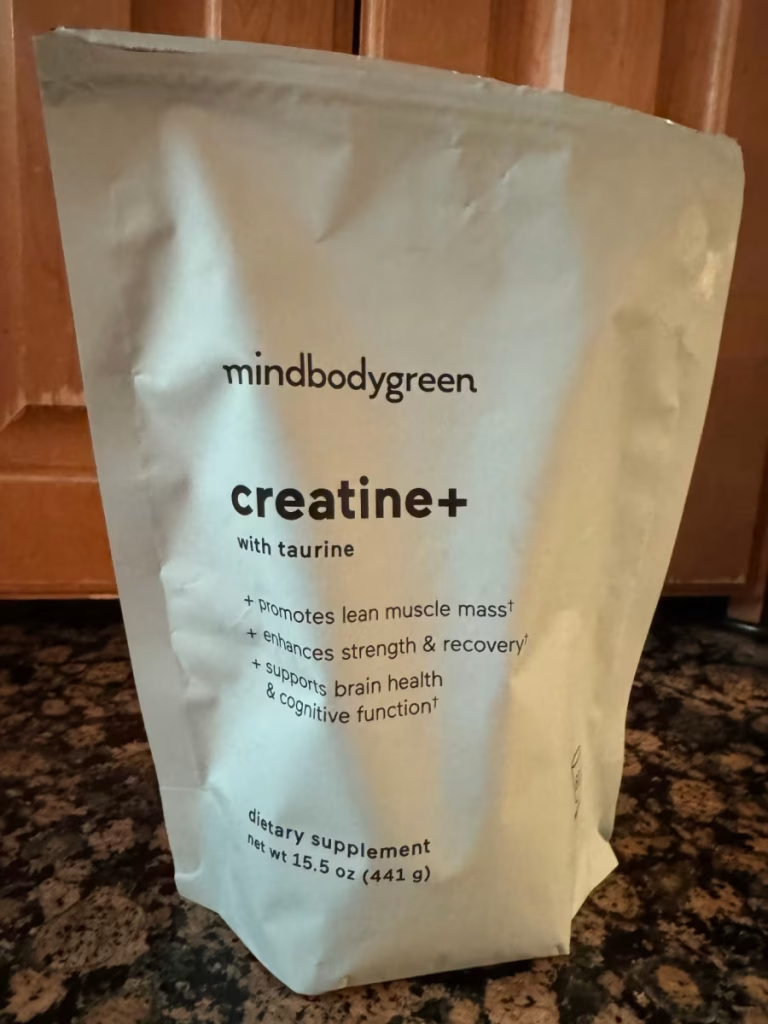
Being rather fond of my muscle and brain function, I decided to do some further research, including reading these reports from Harvard Medical School and Cleveland Clinic. In this blog post, I am sharing what I learned from that research, as well as my personal experience taking a creatine supplement for almost a year now.
Again, I have to remind you that while I am a health coach, I am not a medical professional. This information is provided for educational purposes only and should not be considered medical advice.
What is creatine?
As described by Cleveland Clinic, “Creatine is a natural source of energy that helps your skeletal muscles flex (contract). It helps create a steady supply of energy in your muscles so they can keep working, especially while you’re exercising.” Your body creates creatine naturally in the liver, kidney, and pancreas, as well as taking some from your diet (red meat, seafood, and animal milk).
What are the possible benefits of creatine supplementation?
According to Howard E. LeWine, MD, Chief Medical Editor, Harvard Health Publishing, creatine may enhance athletic performance, as “it contributes to rapid energy production and may enhance power or speed bursts requiring short periods of anaerobic activity. There is also some evidence that creatine supplementation along with adequate calorie and protein intake can hasten muscle recovery after strenuous exercise.” This may be because creatine promotes glycogen in muscle to help the healing process.
To be clear, creatine supplementation does not build muscle; however, when used in conjunction with regular resistance training and a well-balanced diet, creatine supplementation may offset age-related sarcopenia.
In addition, Cleveland Clinic reported that “studies suggest that creatine supplements may help brain function in people 60 and older. This includes short-term memory, reasoning, and neuroprotection (keeping groups of nerve cells safe from injury or damage).”
Is creatine supplementation safe?
Both Harvard Medical School and Cleveland Clinic found that creatine supplements are safe for most people. People with kidney disease should consult with a physician before taking creatine supplements.
My experience with mindbodygreen creatine+taurine
First a quick disclaimer: I did not receive any compensation or free product for this review. It is simply my honest opinion. If you order any supplements, including creatine, from mindbodygreen using the link below, I will receive a small commission, but more importantly, you will receive a 10-percent discount. A win-win.
Why I chose mindbodygreen creatine
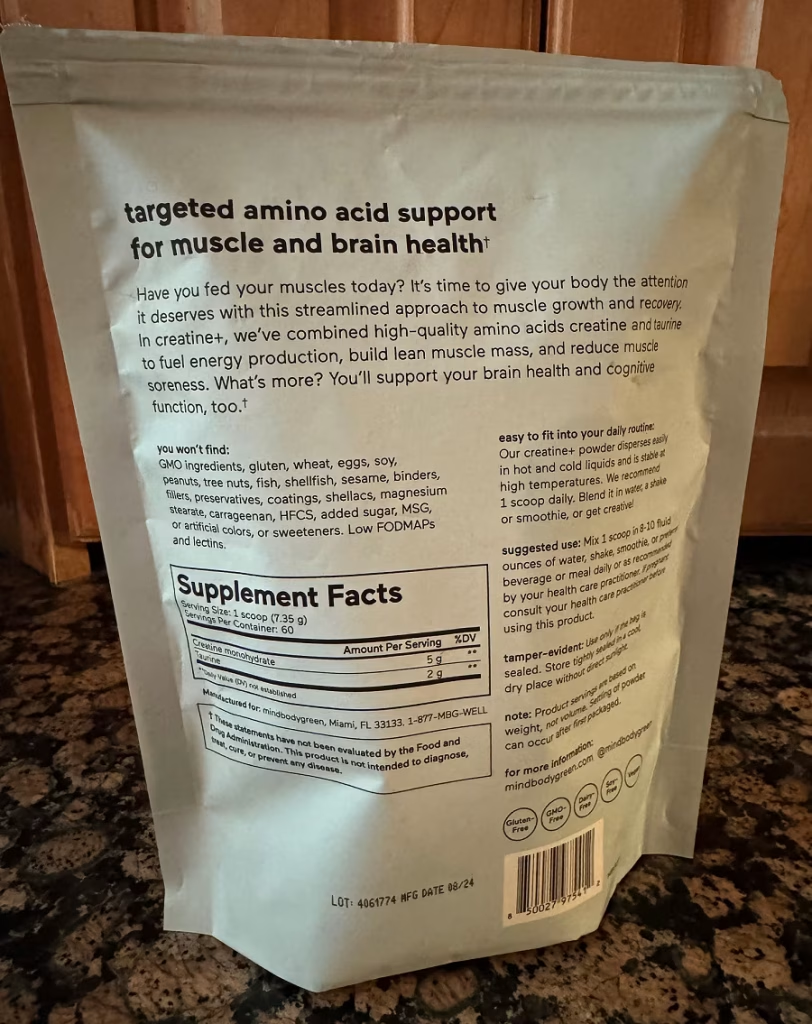
When I decided to try creatine, I chose mindbodygreen because I was familiar with and trusted the company. Their product is third-party tested and free of artificial additives, and the dosage was in line with the medical experts’ recommendations. One scoop contains 5 g of creatine monohydrate and 2 g of taurine. In addition, while it wasn’t a deciding factor for me, it’s worth noting that the product is vegan and gluten free, in case that is important to you.
I understand that there are creatine gummies available, but it appears that powder is a safer choice, as the gummies contain added sugar and haven’t been studied like the powder has. From what I read, the absorption rate for the creatine in gummies hasn’t yet been determined.
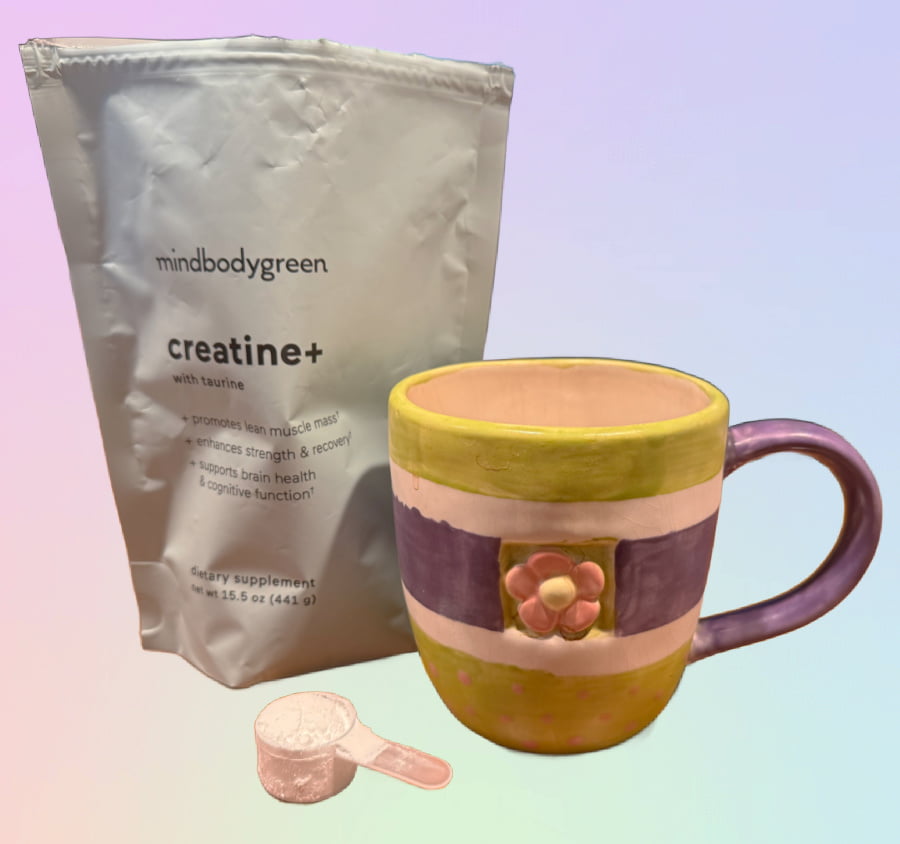
I find mindbodygreen’s powder creatine+taurine easy to use. I stir one scoop in my morning coffee. It easily dissolves and doesn’t change the flavor or consistency of the coffee. It can also be added to smoothies. I did try it in plain water once and it didn’t mix in as well. It wasn’t terrible, but I prefer the other two options.
My results after 11 months of daily usage
So what about results? I started using mindbodygreen creatine+taurine on 11/01/2024 and have used it every day since then. I did not think to have an InBody scan at the time I started the supplement, but since my last scan prior to that (March 2024), I have gained 3.3 pounds of skeletal muscle mass at an age where a loss of muscle mass is typical.
To give you the full picture, I also increased my protein intake beginning in January of 2025. I made no change in my exercise routine during that period.
In addition to the gain in muscle mass, my performance at the gym has also improved. I have PR’d just about every challenge or benchmark this year, and often place in the top three for my age group. I don’t have any scientific evidence to prove that this is due to creatine supplementation, but it sure hasn’t hurt.
As far as brain function, I can’t say I have noticed a marked improvement in the past year, but neither have I noticed any decline.
I am also pleased to report that I have not experienced any unwanted side effects.
Would you like to try creatine at a discounted price?
If you are interested in trying mindbodygreen creatine…or any of their supplements…use this link to get 10% off your order.
Related video
Your turn
- Do you say yay or nay to supplements? Are there any you swear by?
- What is your favorite protein source?
- What else is on your mind? Anything at all; I just love to hear from you.
Sources:
- https://www.health.harvard.edu/exercise-and-fitness/what-is-creatine-potential-benefits-and-risks-of-this-popular-supplement
- https://my.clevelandclinic.org/health/treatments/17674-creatine
- https://www.mindbodygreen.com/articles/nearly-700-studies-confirm-you-should-stop-believing-this-myth-about-creatine







Hi Christie – what a coincidence! I’ve been approached by an Australian supplement enthusiast who asked if he could share about the benefits for menopause. He’s going to be writing about creatine because I’d never heard of it and it sounded interesting. Now I’m even more onboard with seeing what he has to say after you’re positive outcomes. I don’t see myself as a supplement user, but I’m always happy to share info for others like you have here. There’s always something new to explore… I’ll definitely be including a link back to your post when he sends his through. x
We’ve done it again, Leanne! I’m always surprised at how often we seem to be on the same wavelength. I’m curious to see what your contact has to say about the benefits of creatine during menopause. And, if it works with the information you receive, I would love a link-back. Thanks for thinking of me.
I have been reading more and more about creatine. I wonder if it’s because of the big number of Boomers (me included) who are aging and looking for ways to age with grace and health. I’m going to have to give this some thought.
https://marshainthemiddle.com/
You may be on to something, Marsha, as far as the reason creatine has suddenly become such a topic recently. If you are interested, perhaps see what your doctor thinks about it. Like I said, I’ve been pleased with the results.
I don’t generally take any supplements but I absolutely loathe how many gummy vitamins and supplements we now make. I get making a few varieties for kids and people who can’t swallow pills but I feel like it’s getting harder and harder to find options that aren’t gummy and that is just crazy to me. All that added sugar can not be good. I am impressed with your ability to gain muscle mass– that’s fabulous!
I never used to take supplements either, Joanne. There is so much mixed messaging. I now take some that my physicians have recommended based on my bloodwork and then this one that I personally found intriguing. I’m with you on the subject of gummies that are supposed to be good for you, yet being loaded with sugar and other additives.
I only take supplements if there’s a known benefit and if I can get them from trusted sources, there’s so much bullshit in the supplement industry, there isn’t enough regulation and it’s hard to trust what’s on the labels.
Other than vitamin D, I’ve been taking whey protein for a few years as an addition to my usual diet (which is also protein-focused) and especially when I travel and it’s hard to find good protein sources. I take 2 scoops creatine every day, and recently started tracking and optimising my magnesium intake, since it seems to be key to a lot of important functions and especially seems to help women approaching (or who are into) menopause.
Creatine has so many benefits and is so well-researched that there’s absolutely no reason to not take it! I’m so glad to see information about it being spread more to the general public and not only in hardcore gym circles. There’s more and more information coming out about the benefits for women in peri/menopause too.
Like you, I’ve seen a big improvement in performance and muscle growth, and it also helps recovery after training. What is from the creatine and what is from a high protein diet is hard to say, but both are needed and both work together for good results. In addition to this, I started taking electrolytes in one of my water bottles to the gym this summer and I think that has been a game changer for my performance too.
Thanks for the tip about adding it into the coffee! I tend to forget to take it on the days I don’t take a smoothie. I must try that.
I’m pretty skeptical of supplements too, Susanne. I only take a few that my doctors have recommended specifically for me based on my bloodwork, and those seem to have helped. Creatine is the first one I decided on my own to try…and only after really researching. For me at least, the hype seems to be justified. I’m glad to hear you have had similar results.
Hi Christie, what a very timely subject matter for you to blog on! I’ve been hearing about Creatine and its benefits for Menopausal women everywhere! I get tired of the ever increasing supplements that we’re told we should have, however this one is one I am keen to add to my routine. I’m doing a lot of strength training nowadays and I also want to look after my cognition (having lost my mother to Alzheimers). Thanks so much for sharing this information with us at #WWWhimsy xo
I try to get as many vitamins and minerals as I can from food, Min, and like you, I dismiss many of the supplement promotions I hear. For some reason, creatine intrigued me, and as I said, I haven’t been disappointed. If you do decide to try it, I’d love to hear what you think.
Christie, how interesting – creatine isn’t something I’ve ever considered as I always believed it fell in the domain of body building. I can feel I’ll be going down a rabbit hole shortly 😉
I’ve not taken supplements for a couple of decades but am currently taking Vitamins B9, B12 & D following blood tests showing a significant deficiency in all three. I’ve also added Magnesium – both for enabling Vit D to be absorbed better and because of early morning leg cramps. In truth, I find it all rather a chore as they each have to be taken at different times, but I’ll doubtless get used to it.
You are not alone, Debs, in thinking that creatine was just for bodybuilders and athletes. I think this interest in its benefits for others…especially during perimenopause, menopause, and post-menopause…is fairly new. Like you, I started taking supplements recently based on bloodwork deficiencies. It can be a challenge. Calcium, iron, and thyroid medicine cannot be taken within four hours of each other…and iron and thyroid medicine are both more effective on an empty stomach. I’ve got them all on a pretty good routine now, but it’s tricky.
Christie, other than the electrolytes I take on tennis days, I don’t take supplements. My SIL and daughter (who are basically gym rats) swear by creatine and have suggested them for us many times. My high-protein diet seems to work for me, but I’m sure a supplement of creatine couldn’t hurt.
I try to get as many nutrients as I can from natural food as well, Suzanne. It makes sense that would probably be the best approach. However, I have begun taking more supplements, as indicated by my bloodwork and recommended by my doctors. Creatine is the first supplement I decided on my own to try, and I’ve been happy with the combination of a high-protein diet and creatine supplement. If you do decide to try creatine at some point, I would be interested to hear what you think.
I do from time to time take calcium and magnesium but steer clear of anything with kidney or liver warnings. I read prunes are good for menopausal women’s bone density so going with that – don’t know if it’s true but not expensive so can’t hurt….#WWWhimsy
Best to protect our livers and kidneys, for sure, Lydia. I’m not a huge fan of prunes, but maybe I just haven’t had good ones. I used to think I didn’t like brussels sprouts until I had some really tasty ones in a restaurant.