What exactly is BMI and is it useful?
By the time we reach middle age, most of us have learned our BMI (Body Mass Index), either from a medical professional, a weight loss organization, or from performing our own calculation. But where did BMI come from, and is it really useful?
Before I get started, please remember that I am not a doctor or medical expert of any kind. I get my information from personal experience and online research. For reliable medical advice, please see a real professional.
A brief history of BMI
The original BMI calculation was developed by a Belgian statistician named Adolphe Quetelet more than 200 years ago. His stated intention was to define characteristics of the “normal man.” He used data from predominantly white European men and stressed that the data should not be used on an individual level.
In 1972, Ancel Keys reintroduced the calculation of kg/m^2 as a way to measure health. Many clinical practices continue to use BMI as a quick and noninvasive tool to measure body fat, which is a predictor of developing metabolic diseases and other chronic conditions.
Calculating your BMI
Body Max Index, commonly referred to as BMI, is strictly the relationship between a person’s height and weight. It does not take into account lean body mass. The U.S. Centers for Disease Control and Prevention provides the following instructions for calculating BMI:
When using English measurements, ounces (oz) and fractions must be changed to decimal values. Then, calculate BMI by dividing weight in pounds (lb) by height in inches (in) squared and multiplying by a conversion factor of 703.
For those of us who are not mathematically inclined, the CDC webpage also includes an easy-to-use online calculator…no math required.
A BMI between 24 and 29.9 is considered overweight. A BMI of 30 or above indicates obesity.
BMI shortcomings
The challenge with using BMI as a health indicator is that the algorithm ignores important factors like body composition, gender, and ethnicity. Because BMI only considers height and weight, the results can be misleading. Individuals with higher bone density or muscle mass can be incorrectly categorized as obese.
According to a study of 40,420 adults in the US published by researchers working out of the University of California, Los Angeles in 2016, if BMI is used as the only measure of health, it would misclassify nearly 75 million adults.
~Maya Feller, MS, RD, CDN
Is BMI useful?
It seems clear to me that your BMI alone is not a great indicator of overall health. However, it may be a useful piece of the puzzle when used in conjunction with other measures, such as body composition, blood pressure, cholesterol, A1c, and levels of physical activity.
Your turn
- Do you know your BMI; and if so, does it coordinate with what you believe to be true about your health? (You don’t need to share numbers with us.)
- Besides your doctor’s office, where else do you go for health and wellness advice?
- What else is on your mind? Anything at all; I just love to hear from you.
Additional resource: Maya Feller, MS, RD, CDN, mindbodygreen
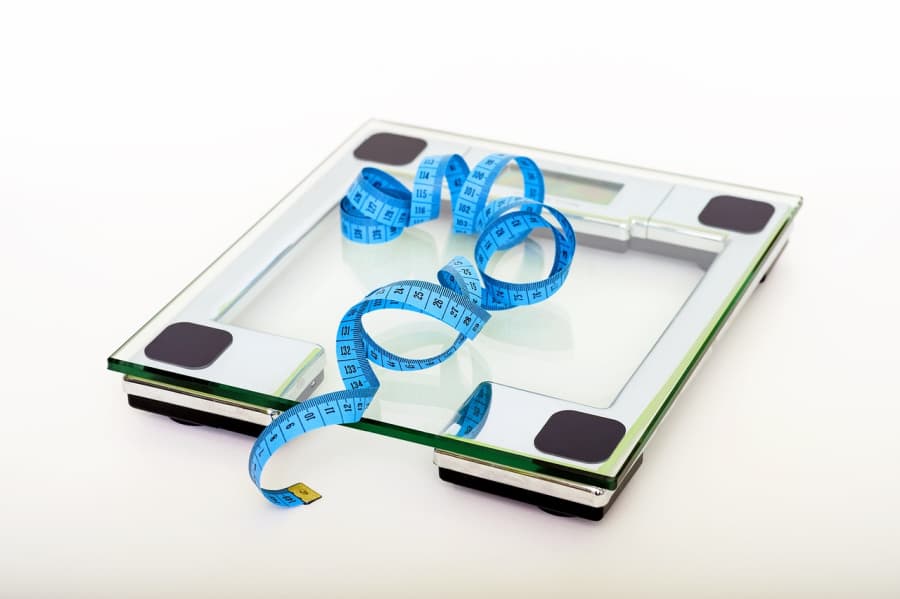
Image by Vidmir Raic from Pixabay






I just used an online calculator (does all the math for me) to figure out my BMI. It did ask for age and gender. For what it’s worth it said I am healthy. I have been losing a little weight and feel if I lost too much more I would be too thin. I was surprised what a small window there is to “being healthy”. Mark is as thin as I’ve ever known him to be, and it said he”s overweight. I don’t think you can put a lot of stock in BMI.
That is interesting, Cindy. Thanks for sharing your results and your thoughts on them. I agree that BMI doesn’t tell us much on its own.
Hi Cindy – I’ve done my BMI a few times over the years and it always falls in the mid range. I’m not a huge fan of it because it needs to be calculated and I rarely remember to use the tool. I also find it works more for the “average” and being tall seems to mess with the results a little.
I’ve done mine several times over the years as well, Leanne, usually in combination with other measures. I find that, for me, my BMI does pretty closely equate with other measures of body composition, but from what I’ve read, I don’t think it’s a reliable measure for a large segment of the population. Thanks for sharing your experience with us.
I admit I don’t like the BMI as a sole measure and know you are sharing that too. Sadly it can become such a NEGATIVE in many like me who have a long (negative) diet history.
I am as healthy as I am going to be right now at 74 and pleased to be that way.
I came to comment via direct mode as on my side of the link up I still cannot open.
I am unsure if anyone else has the issue when trying to open to comment. Sorry!
Take care
Denyse
#TeamWWWhimsy
Thanks for sharing your experience with BMI, Denyse. I agree that it can be dangerous in a diet culture like ours where being thin is so valued. I am happy to hear that you are pleased with your health at this stage of life. I know you have had many struggles along the way. I admire how you have come through them and come to good terms with your body. Thanks again for taking the extra step to get to my blog. I’m truly stymied at this point.
Hi Christie, I used to monitor my BMI regularly, but don’t worry about it these days. From what I’ve read, it’s not considered accurate due to the variations that can occur in a person’s body, such as large muscle mass due to weight training. Very interesting to read your post. #TeamWWWhimsy
Thanks for your input, Jennifer. That seems to be the consensus that BMI is not particularly useful in gaging health or even healthy weight.
Hi Christie, I decided a long time ago to not look at my BMI anymore as it was too upsetting. I’m short and of a certain age and it often puts me at a higher BMI and into a range that just isn’t right if you were to look at me. I guess it’s helpful in some ways and for some people but it’s not for me. It doesn’t consider age and body composition as you said. I go by how I feel more than anything. I rarely even weigh myself anymore. Thanks so much for linking up again with #WWWhimsy – enjoy the rest of your week! xo
Going by how you feel beats BMI or a number on the scale any day, Min. Thanks again for hosting #WWWhimsy. I always enjoy connecting with the other bloggers there.
Hi Christie, BMI is always an interesting topic and over the years I’ve heard things for and against it. These days I tend to use my clothes as a measure, I don’t weigh myself or measure anymore and if my clothes feel tighter than they should I start making changes. As I do some weight/strength training I’m aware the results could be skewed and I don’t want to put pressure on myself these days! Thanks for sharing this info with us #TeamWWWhimsy
Clothes are a good measure of body changes, Debbie, and probably less prone to obsessing over, like we often do with numbers. I hope you are having an enjoyable week!
Hi Christie, I’ver read that BMI isn’t as useful these days but for me, any type of measurement is good. If nothing else it reminds us of our goals and what we want to achieve. Thanks for writing about BMI as I think many would not know what it means and what it is used for. Stay healthy and happy.
Yes, Sue, BMI can be helpful in conjunction with other measurements for certain people…and not so much for others. I fall in the same category as you. I don’t focus on BMI by itself, but in combination with other measurements, BMI provides one piece of the puzzle.
I don’t put much stock in BMI. In my experience when mine was *perfect* I was seriously ill while when mine was *a little high* I was healthy. It’s just a number, nothing more.
It’s good to know what does and doesn’t provide valuable information for you personally, Ally. There is so much data available now, you have to be able to pick and choose what to pay attention to and what to ignore. And, of course, there is danger in striving for something that isn’t a healthy measure for oneself. Here’s to health and happiness!
Intersting – I was talking to two surgeons and one had strict rules on BMI and one had no rules. Ie one wouldn’t do the surgury at all unless your BMI was under a certain figure. I don’t know mine but I doubt it’s great. I’m a scales person, and more – does this still fit me person. #WWWhimsy
Isn’t that interesting, Lydia, even doctors can’t agree on BMI. I like the “Does this still fit me” and “how do I feel” for personal measures, along with occasional bloodwork to tell me what’s going on inside.
I thought I knew my BMI and unfortunately, I did. Overweight. Boo. A BMI of 24. And that is if I am inputting my really good day weight. My body doesn’t handle fat well at all. I think it must be a genetic thing but I have lipomas everywhere. And have had cellulite since I was born. Given up on trying to rid myself of either but just trying to be my healthiest me. Thank you for an interesting article. Glad my doctor doesn’t just rely on BMI to determine my health.
I do believe that BMI is of limited value, Leslie, so I’m glad your doctor doesn’t rely on it for a health measure. I’m with you in having given up on trying to reach perfection with my body. I just want to be the healthiest me I can be while still enjoying some of the guilty pleasures of this life. Here’s to health and happiness!