
What is the difference between USDA’s MyPlate and Harvard’s Healthy Eating Plate?
With so many different recommendations about what you should be eating for optimal health, it’s easy to get overwhelmed and throw in the towel…eating whatever you want when you want. And hey, that may not be a bad way to go, but if you are looking for some basic guidelines that allow flexibility in choices, you may want to consider one of two “Plates” recommended in the United States: the USDA’s MyPlate or Harvard’s Healthy Eating Plate.
Okay, so we’ve narrowed it down to two options, but which one is best? Let’s answer that question by looking at the differences.
But first, a reminder that I am a Health and Wellness Coach, not a dietitian or healthcare professional. I am sharing general nutrition information with you for educational purposes only. If you are looking for medical advice or someone to develop an eating plan for you, please seek advice from the appropriate professionals.
My Plate
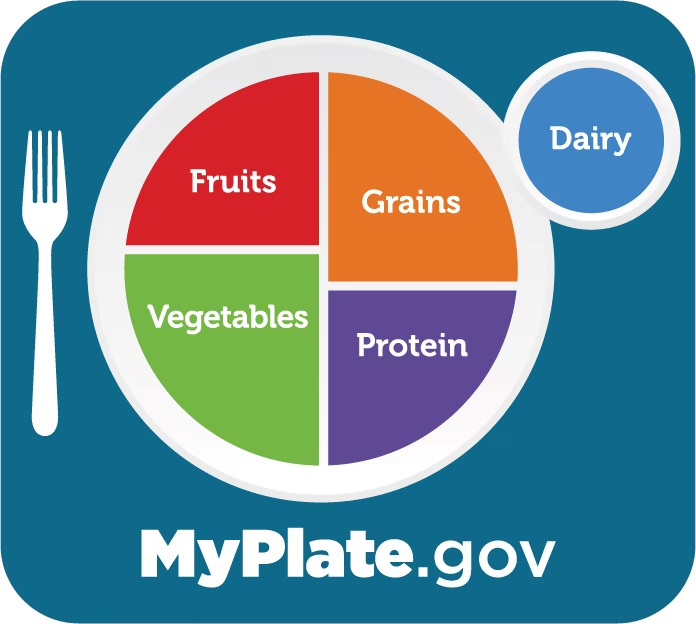
Simply put, the USDA’s MyPlate recommends that each meal consist of approximately ⅓ vegetables, ⅓ whole grain, ⅙ fruit, ⅙ protein, and one serving of dairy.
Harvard’s Healthy Eating Plate
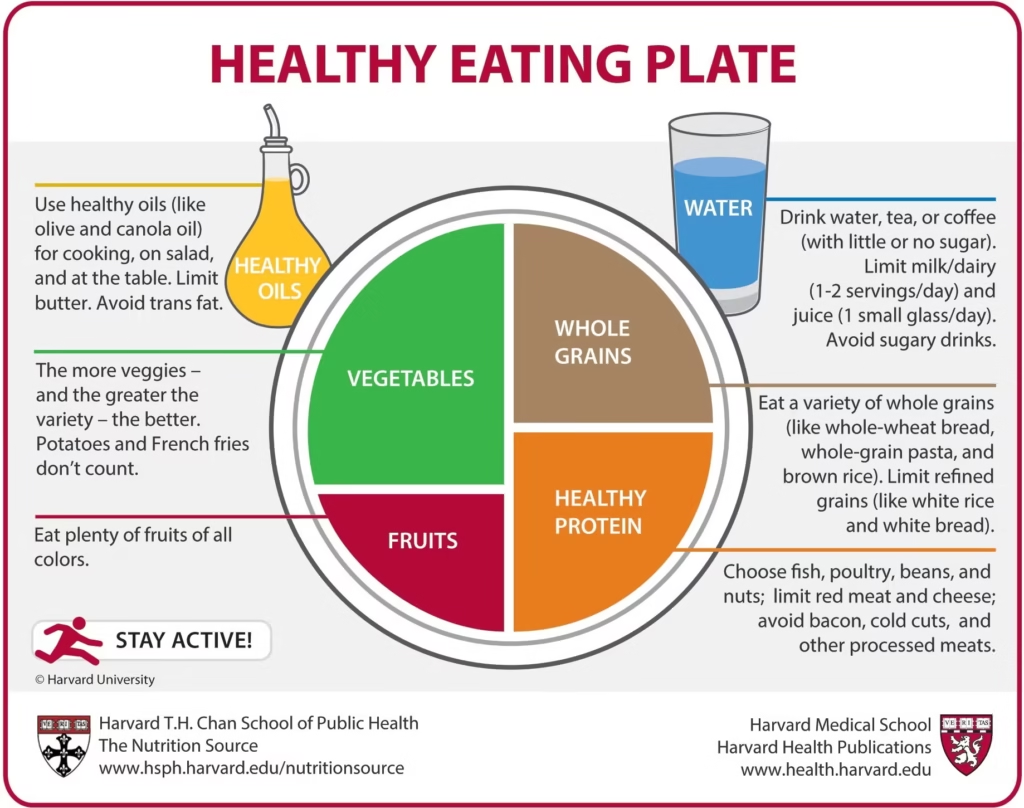
Harvard’s Healthy Eating Plate recommends slightly different proportions: ⅓ vegetables, ¼ protein, ¼ whole grains, and ⅙ fruit. It recommends limiting dairy and drinking plenty of water. It also gives a nod to using healthy oils and staying active.
Additional differences between USDA’s MyPlate and Harvard’s Healthy Eating Plate
| MyPlate | Healthy Eating Plate |
| Recommends dairy at every meal. | Recommends limiting dairy to 1-2 servings per day since high dairy intakes are associated with increased risk of prostate cancer and possibly ovarian cancer. |
| Does not distinguish between types of protein. | Encourages limiting red meat and avoiding processed meat due to increased risk of heart disease, colon cancer, and weight gain. |
| Does not distinguish between potatoes and other vegetables. | Encourages an abundant variety of vegetables – except potatoes. |
| Does not distinguish between types of fruit. | Recommends eating a colorful variety of fruits. |
| Is silent on fats. | Encourages consuming olive, canola, and other plant oils, due to healthy fats reducing harmful cholesterol and benefiting heart health. |
| Is silent on activity. | Contains a reminder that staying active is half the secret to weight control. |
Which plate is better?
If you are looking for the most simple solution with the most flexibility, it seems USDA’s MyPlate may work best for you. If you don’t mind adhering to a few more guidelines, Harvard’s Healthy Eating Plate takes into consideration more health considerations. When it comes right down to it, the best plate is the one that inspires you to make lasting changes, however small, to improve your nutrition habits.
Your turn
- Do you follow either of these nutrition plates or do you prefer another healthy eating plan?
- Are you ready to commit to one small nutrition change? Would you like to share it with us?
- What else is on your mind? Anything at all; I just love to hear from you?






I like the My Plate approach because it trusts you to make good choices for you. The Harvard’s Healthy Eating Plate adds some variables, that while I adhere to them because I am me, seem like they’re confusing the issue. If the idea is to get people to eat a better diet then keep it simple [and potentially free from judgement] like the My Plate does.
MyPlate is definitely simpler and easier to follow, Ally. I like the idea of understanding the additional elements on the Healthy Eating Plate and hopefully some of those habits naturally sink in without having to track too many things.
If I really had to choose one, it would probably be the Harvard Healthy plate. It seems to be a little more detailed, and I like details. It also includes more protein which I’m learning is really key to my diet. My biggest problem is avoiding processed foods. I need to figure out how to make those foods myself with natural ingredients instead of all those polysyllabic words I can’t even begin to pronounce! Thanks for the breakdown, Christie!
https://marshainthemiddle.com/
We are on a similar track, Marsha. I have been focused on increasing protein and reducing my intake of highly processed foods for the past year or so. One of the steps I take is to look for unrecognizable ingredients on labels.
They look very similar to me Christie – I figure I’m following them pretty much by accident and from making generally healthy choices – we’ve had it drummed into us to eat lots of fruit and veg, and a mix of the rest and that ticks most of the boxes for me.
It’s nice when eating healthy begins to come naturally without a lot of tracking or calculating, isn’t it, Leanne. Good on you.
I love this Christie I’ve always tried to stick to a plate that is 50% vegetables, but I think that’s a bit old fashioned now. I was vegetarian for decades so even though I’m not completely vegetarien these days I do tend to fill my plate with vegies. Probably to the detriment of eating enough protein. Adding more protein to my diet is on my mind every day.
I don’t think you can eat too many vegetables, Jennifer, unless of course it prevents you from getting enough protein. Even as a meat-eater, I sometimes find it challenging to consume the recommended amount. I imagine that vegetarians have to be very intentional and determined in order to get enough protein.
I was surprised by the addition of dairy at every meal in the USDA’s plate, although a friend of mine (who was a long-time follower of Weight Watchers) always said how important milk was to her weight loss journeys because it filled you up. I had a problem with that because I don’t like the taste of milk, resulting in my having to find ways to incorporate healthy dairy options into my diet in my later years as a result. I also cannot manage huge lumps of protein like big pieces of meat, so have to keep an eye on my diet to ensure I consume enough.
Currently my focus is on finding a balance in the limiting/eliminating of empty calories without also removing all the joy from food 🙂
I’m not a big fan of just drinking plain milk either, Debs. The funny thing is I used to drink a glass every evening with dinner. Now I can’t manage that. I do enjoy other types of dairy, such as yogurt and cheese. I understand what you are saying about finding the balance between eating healthy and eating joyfully. Sometimes they line up for me, but not always.
I don’t follow that but I bulk out any meat dish (stir fry etc) with vegetables. I’m increasing the number of plant only meals a week too. #WWWhimsy
That sounds like a great plan, Lydia. My favorite advice is still, “Eat real food. Not too much. Mostly plants.”
Hi Christie, we have cut back on red meat as both Mike and I need to be aware of saturated fats because of our cardio conditions. Also, Mike has type 2 diabetes so that adds another layer. We eat many vegetables, chicken and fish so I suppose we follow a Mediterranean diet loosely as recommended by my Cardiologist. Thanks for the information but it confusing isn’t it when different sites say different things. Sue L – #TeamWWWhimsy
There is so much conflicting information out there, Sue. I think we just have to be aware of the options and choose one that makes sense for us individually. And, of course, having a doctor’s input is useful, especially when there are health conditions to consider.
I like Harvard’s Healthy Eating Plate better since I don’t really like dairy but I definitely don’t eat like either of these at every meal.
I like to think of either of these “plates” as general guidelines rather than strict requirements for every meal. I definitely do not have dairy with every meal either. I probably have one serving on most days, sometimes two.
Hi Christie, I like the Healthy Eating Plate option over the other. I’m lactose intolerant anyway so avoid Dairy. I also think distinguishing between good fats and bad fats is important as well as pointing out preferred proteins. I’m planning on cutting back on red meat – not that I eat a lot of it. Thanks for linking up with us again this week at #WWWhimsy xo
I like the extra distinctions and guidelines in the Harvard Healthy Eating Plate as well, Min. Like you, I am trying to cut back on red meat, but finding it a challenge as my husband prefers it over chicken and won’t touch most fish. Life is full of compromises, huh? Thanks once again for hosting #WWWhimsy. I always look forward to it.
I pretty much follow the Harvard Health plan, although unlike many people who commented on your blog, I do like milk. I think my servings of dairy are always smaller than what the container says, so that probably helps me not get too much. I will commit to make my vegetable servings bigger!
I’ve always admired your moderate eating habits, Cindy. I suspect you are doing just fine. Most of us could use more vegetables though, I’m sure. Good luck with your commitment!
Thanks Christie, you always share interesting and informative posts!
Thank you for the kind words, Debbie.