
What is inflammaging and how can you prevent it?
Stories about the search for a mystical fountain of youth have been passed down for generations. The beauty and diet industries have made billions touting anti-aging products. But it appears there may be a more simple solution to slowing down the clock: reducing inflammation.
“Inflammation continues to be identified as a potential cause for more and more health issues—from mental health imbalances to cancer. Therefore, it should come as no surprise that it’s also a major culprit in premature aging.” ~Taz Bhatia, M.D.
Before we go any further, I want to remind you that while I am a health and wellness coach, I am NOT a healthcare professional. However, the information I am sharing here comes from a medical doctor, Taz Bhatia. That said, if you want personal medical advice on premature aging or anything else, please see your healthcare professional.
What is inflammaging?
Chronic inflammation is believed to accelerate the aging process by causing tissue damage, oxidative stress, and impacting cellular function, potentially leading to age-related diseases and premature aging…thus it is referred to as inflammaging.
What are common signs of inflammaging?
As we age, we experience…and often ignore…everything from small annoyances to major discomforts. Here are some of the key signs of accelerated aging.
- Fatigue: That feeling that you no longer have the energy that you once had or that you may have lost your spark, enthusiasm, or get-up-and-go indicates your body has some unmet need that must be fulfilled.
- Memory and cognition loss: Searching for words, having trouble remembering, and difficulty concentrating or focusing are all signs of shifting brain chemistry.
- Weight changes: Excessive weight loss or weight gain is a sign of a body out of balance or shifting into a slower mode.
- Decreased mobility: Stiff joints and difficulty moving may be a sign of micronutrient deficiencies or the need for more fat and water.
- Declining skin and hair health: Brittle, thinning hair indicates a loss of fatty acids, shifting thyroid hormones, or B vitamin deficiencies. The loss of collagen and moisture causes wrinkles and loose skin.
What can I do to prevent inflammaging?
Aging is inevitable, but premature aging is not. There are some simple things you can do to achieve optimal health.
Nutrition
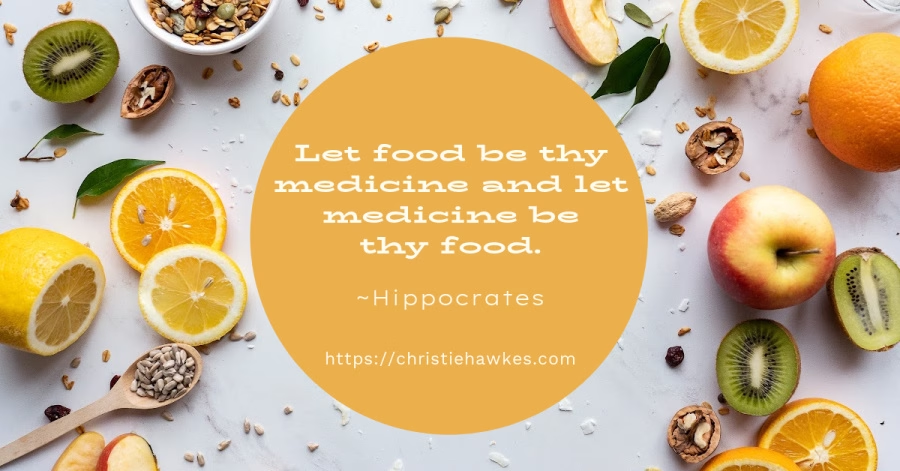
“Let food be thy medicine and let medicine be thy food.” ~Hippocrates
Truer words were never spoken. Food can be our savior or our downfall. And the topic of nutrition and the multitude of “healthy” diets can be complicated and confusing. Today I am going to focus on inflammatory versus anti-inflammatory foods.
Dr. Taz’s Anti-inflammatory Diet Cheat Sheet
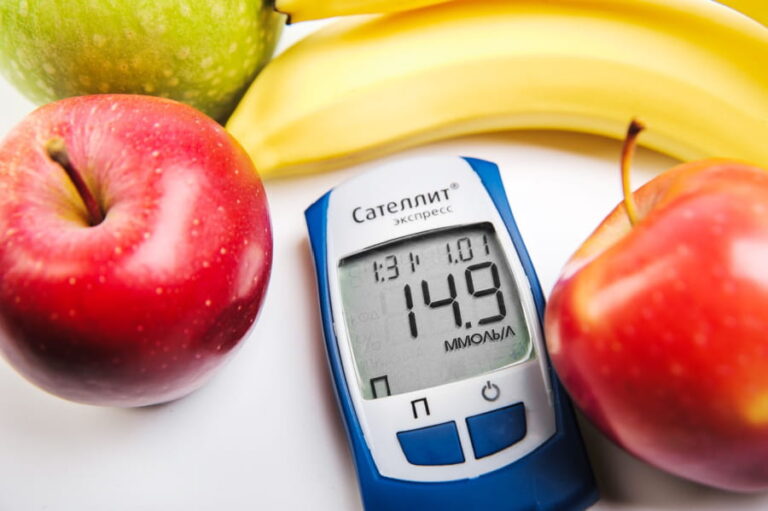
| Inflammatory Foods | Anti-inflammatory Foods |
| Sugar | Olive oil |
| White flour | Coconut oil |
| Alcohol | Nuts, including almonds, cashews, and walnuts |
| Processed foods | Seeds, such as flax and chia |
| Food additives | Fatty fishes, such as salmon and tuna |
| High-fructose corn syrup | Grass-fed meats |
| Hydrogenated fats | Cruciferous vegetables |
| Apples |
Anti-aging nutrients
| VITAMIN B Mood, hormones, memory, energy | VITAMIN D Immune support, sleep, energy, cancer fighter | MAGNESIUM Sleep, hormones, anxiety, thyroid |
| ANTIOXIDANTS A, C, E, and CoQ10 Muscle recovery, brain, eye, and heart health | AMINO ACIDS Cognition, muscle mass, muscle recovery, energy | FATTY ACIDS Brain and hormones |
Lifestyle factors
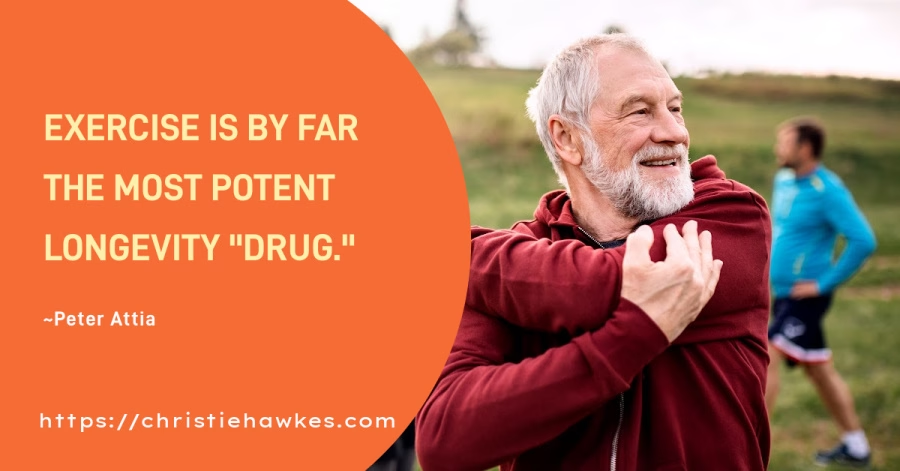
“Exercise is by far the most potent longevity ‘drug.’” – Peter Attia
- Exercise: Both aerobic and anaerobic exercise improve oxygen delivery to the whole body.
- Sleep: Sleep is required for repair of body functions and proper signaling of all our hormones.
- Stress control: Stress triggers the rise and fall of cortisol and adrenaline levels and is the biggest factor in aging and inflammation.
- Spirituality/community: Connection helps support your brain and can be seen in MRI scans.
Bottom line
“It’s not how old you are. It’s how you are old.” – Jules Renard
Your turn
- Have you heard of “Inflammaging,” or is this a new concept for you like it was for me?
- Is there one small change you can make today to prevent inflammaging?
- What is your favorite aging quote?
- What else is on your mind? Anything at all; I just love to hear from you.
Scheduling note
I will be traveling this week, so I may be slower than usual in answering your comments. I promise I am eagerly reading them and will respond as soon as possible.
Source
Anti-Aging with Taz Bhatia, MD, mindbodygreen
Image by Best Psychologists in Lahore from Pixabay


A good list of foods that could help a body feel better. Thanks for sharing it here. Every little bit of information helps me [us] age more gracefully.
Enjoy your travels.
Thanks Ally! I’m sure we will.
Hi Christie – I hadn’t heard this term before, but I can see how it would come into play. It’s another reminder to age well and to look after ourselves – our ‘whole’ selves with care. I think I can tick most of the boxes in small ways – although I need to remind myself to be more social these days (it’s so much easier to stay home in the quiet!)
You’re right, Leanne, there are many aspects to aging well. It is easy for us introverts to just stay home, and I believe there is a place for that. I know you have strong family connections, so that definitely counts.
I haven’t heard of inflammaging, but I do think I may be suffering from it. When I looked at the foods, I’m doing pretty well there. I think it’s the exercise part I’m missing. I need to add that to my life, but I’m just dragging my feet (when I should be using them). Thanks for all the info!
https://marshainthemiddle.com/
Baby steps, Marsha. I count a casual walk or gentle yoga session as movement. Although, I also enjoy a more vigorous workout.
Hi Christie, good reminders to pay attention. I have been overindulging lately with food and alcohol, but I have extended my exercise time to counter balance. I know it doesn’t work quite that way, but it can’t hurt. Today I will make a conscious effort to curtail bad habits.
Hi Suzanne. While I don’t know that excellence in one area can completely counterbalance the other, every little bit helps. There are definitely times in my life where I’ve been more diligent in either movement or nutrition. Moderation not perfection!
Hi Christie – fabulous and informative post! I haven’t heard of the term inflammaging but what a great term! It’s very interesting to see the anti-aging nutrients listed here – most of which I take. I think I’m doing ok. I’m no fitness queen but I do get regular exercise. I eat quite healthily but can always do better. Stress is something that is often beyond our control but I do have good strategies to help manage it when it arises. My sleep is quite good the moment. I don’t sleep for a long time but at least I’m getting solid sleep. The good thing is that I’m not working anymore so do have more time to put towards looking after myself! Have a fabulous week Christie and thanks for linking up with #WWWhimsy xo
It’s sounds like you are doing pretty well as far as self-care goes, Min. Sleep is a challenge for me…not for lack of trying. Like you, I love that the retired life allows me more time and energy to look after myself. Here’s to another healthy, happy week!
Hi Christie, this was a really interesting post. Thanks for sharing, this is an easy to understand what we should be doing. Great points! #Teamwwwhimsy
Hello Debbie. It always amazes me that the basic self-care tips are the same for almost every condition or illness we are trying to avoid…eat healthy, move more, manage stress, and get quality sleep. Pretty basic.
I had not heard that term, but I have heard that inflammation can cause lots of problems. I think I’m pretty good at most of the suggestions to help, but I would like to decrease stress. Thats hard to do when you’re a worrier like I am. I still feel like I have ALL the signs of aging, but I like to think it would be so much worse if I wasn’t taking care of myself. 😄
Decreasing stress is a tough one, Cindy, since many of the things that create stress are outside of our control. Then we have to rely on managing that stress. Like you, I see the signs of aging in myself. I guess that’s inevitable. The key is to prevent premature aging, which is where taking care of ourselves is key. So yes, your self-care is paying off.
Thank you for introducing all of us to a new term. I think the work we have done together in my life coaching sessions with you have slowed my ageing process by encouraging me to relax more and connect more authentically. I am anxious to share my progress with you again.
Now to work on eating better. I don’t think we eat badly but we lack servings of fruits and vegetables every day. Thankful to be exercising more normally again and so excited to get back to swimming. You, too?
I am so happy to hear that, Leslie. I look forward to meeting with you later this week. I’m with you on the healthy eating. I actually am quite mindful about my eating, but find it challenging to get in enough protein and produce. I seem to hit one or the other, but not both. And yes I too am eager to get back in the pool.
Christie,
Thanks so much for stopping by!!
Great article…I have heard about this before being a former RN…Exercise is what I need to increase…I recently started back on my stationary bike as thr warm damp weather of spring does a number on my joints, mainly my knees….
Happy Easter to you and your family!!
Hugs,
Deb
Debbie-Dabble Blog
It’s so interesting how our bodies differ, isn’t it, Deb? My husband’s joints get better in the spring after the cold winter, when he is really miserable. But, whatever the case, it seems gentle, consistent movement helps. Enjoy that bike and happy Easter to you and the family as well!
I’d not heard the term before Christie, but it makes so much sense. In fact, I had a lengthy discussion on the subject after reading your post with my Osteopath while being treated. It seems we’re largely OK from your list – with the exception of stress and exercise – one we can do something about, the other we address with a long-term plan, but have to live with the short-term uncontrollable nature.
I’ve been considering whether we’ll benefit from supplementing Magnesium. Vitamin B and I have a complicated relationship. I know I am short in certain ones (B6 in particular), but when I’ve taken a B complex supplement in the past, it sends me loopy (with symptoms like PMS) so I’ve avoided it. I should probably re-test so I can address it in a more targeted manner.
Thanks for your informative posts – it gives me a nudge to review issues I know are there but haven’t reached the top of my worry list yet!
Thanks for the kind words, Debs. I’m glad that my introductory post nudged you toward a more in-depth discussion with your osteopath. I understand your hesitancy to take a Vitamin B supplement with your past experience. I’ve gone back and forth on supplements in general, due to all the conflicting information out there. Currently, I am taking only those recommended specifically for me by my health professionals: Vitamin D and calcium. I think I will discuss supplements more broadly during my next exam.